
Introduction
Choosing the right battery pack is an important step when developing or upgrading a battery-powered device. A suitable battery pack should not only provide enough power, but also fit the available space, meet the required runtime, communicate correctly with the device, and operate safely in its intended environment.
For OEM and ODM projects, battery specifications are rarely one-size-fits-all. The right solution depends on the device, application, operating conditions, and electrical requirements.
This guide explains the key factors to consider when selecting a custom battery pack for your device.
1. Define the Device's Power Requirements
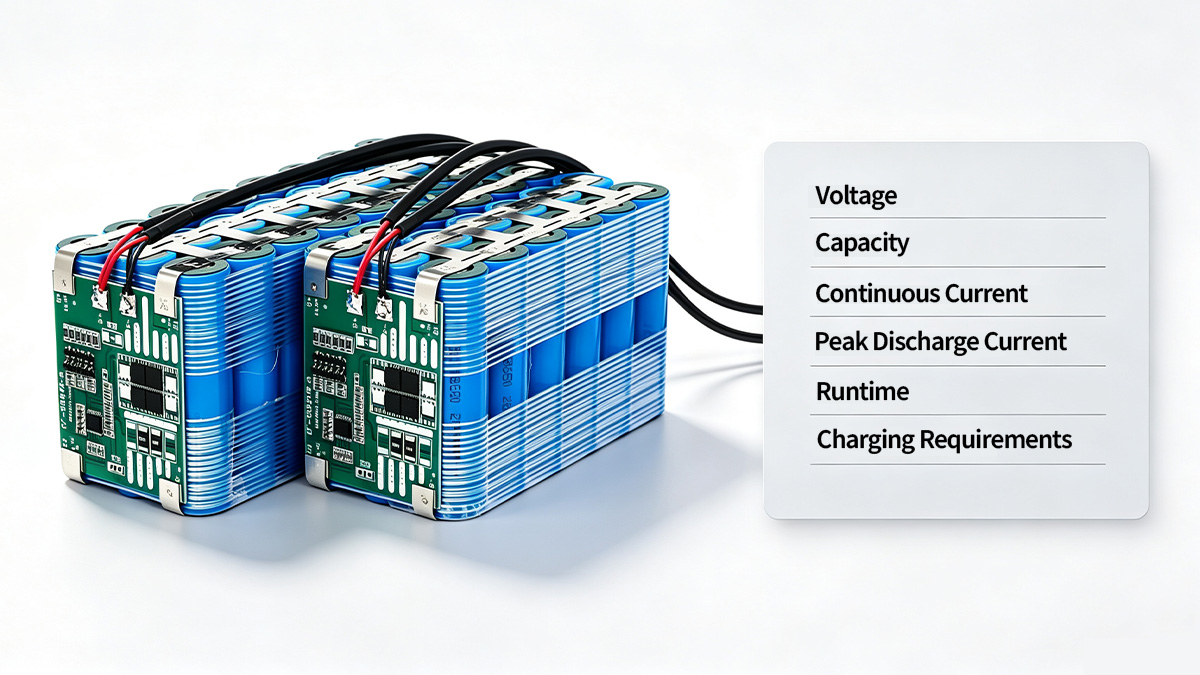
The first step is to understand how much power your device needs.
Important parameters include:
The battery voltage must be compatible with the device's electrical system. Choosing the wrong voltage can affect performance or potentially damage the equipment.
For example, a portable medical device, surveying instrument, robot, or industrial controller may require completely different voltage and current characteristics.
When designing a custom battery pack, we evaluate the device's electrical requirements before selecting the appropriate battery configuration.
2. Choose the Right Battery Chemistry
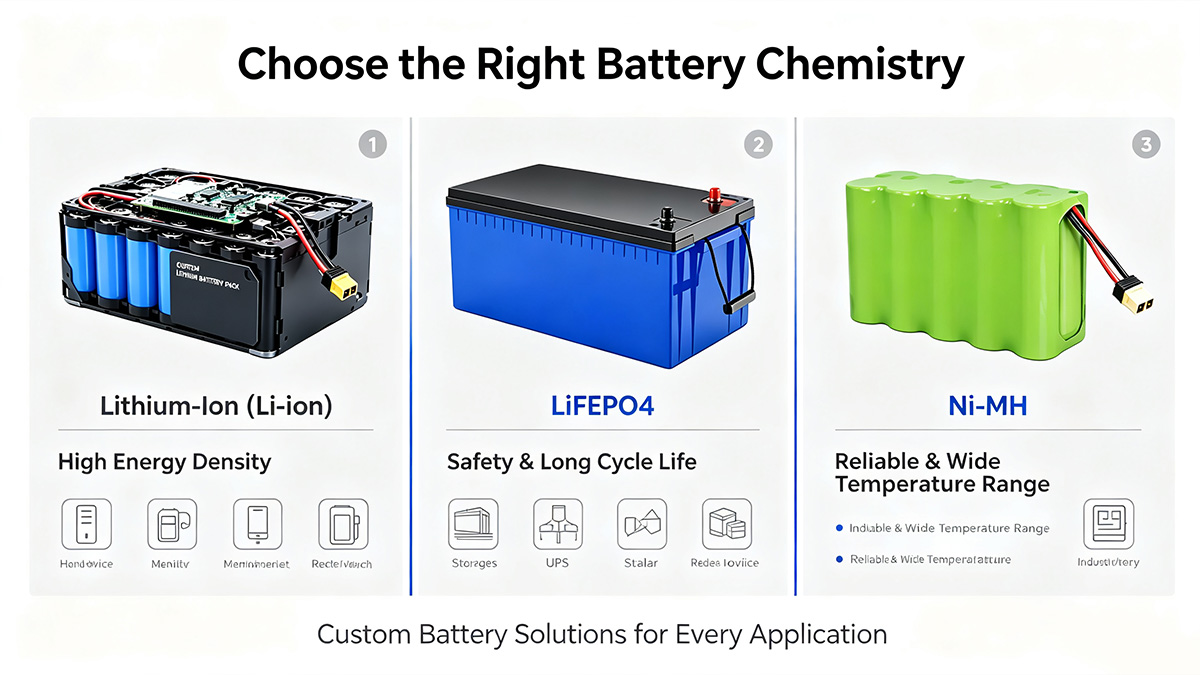
Different applications require different battery technologies.
Lithium-Ion Battery
Lithium-ion batteries offer high energy density, relatively low weight, and flexible pack configurations. They are widely used in portable electronics, medical equipment,industrial instruments, robotics, surveying equipment, and other professional devices.
LiFePO4 Battery
LiFePO4 batteries are known for excellent safety, long cycle life, and stable performance. They are particularly suitable for applications requiring frequent cycling, higher capacity, or long-term operation.
Typical applications include:
Ni-MH Battery
Ni-MH battery packs remain useful for many professional and industrial applications. They provide reliable performance, good durability, and wide operating temperature capability.
The right chemistry should be selected according to the device's power requirements, operating environment, expected cycle life, and safety requirements.
3. Determine the Required Battery Capacity
Battery capacity is usually expressed in mAh or Ah.
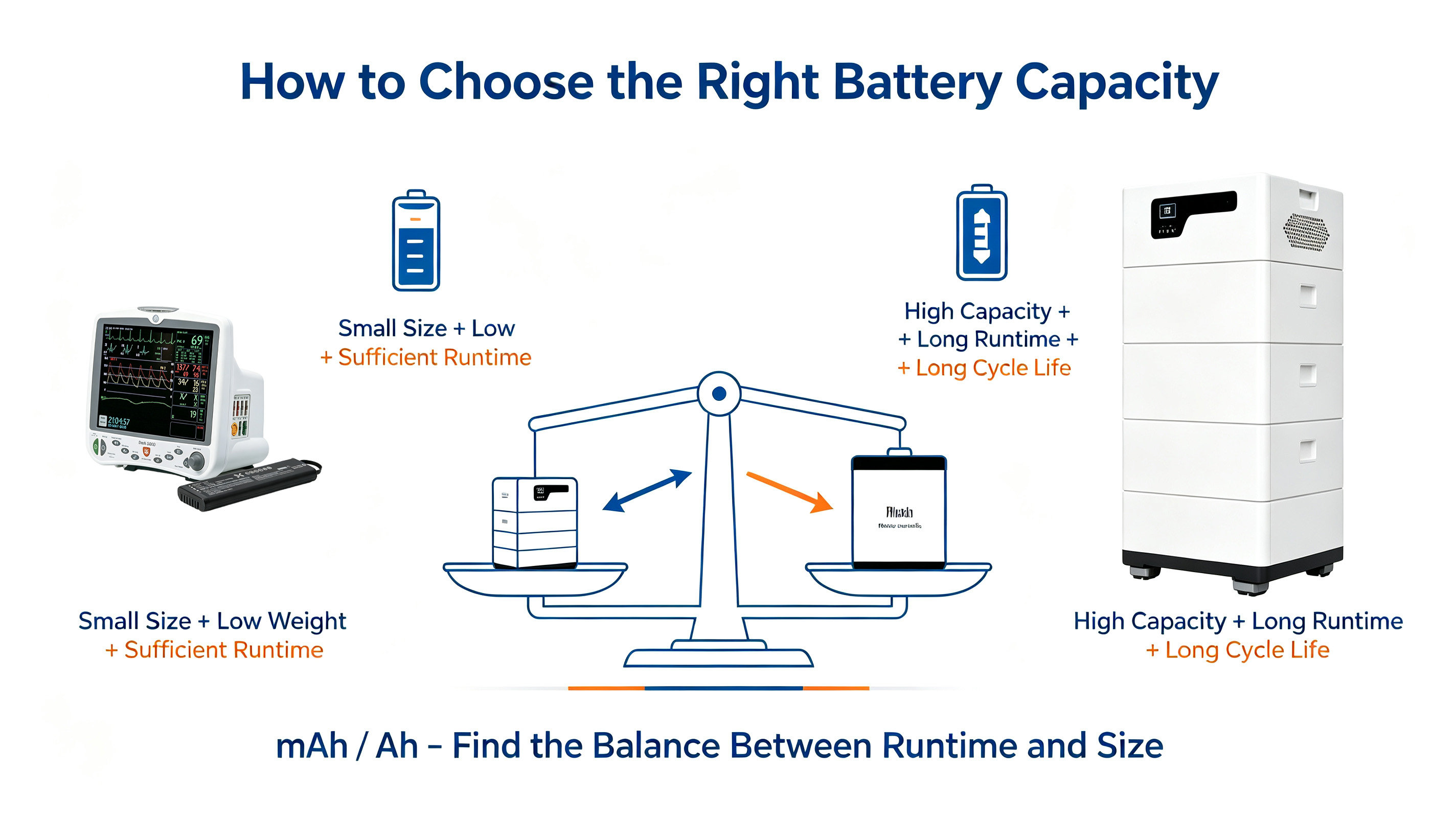
A higher capacity generally means longer operating time, but increasing capacity may also increase the battery's size and weight.
For example, a compact portable device may prioritize:
Small Size + Low Weight + Sufficient Runtime
while an industrial or energy-storage application may prioritize:
High Capacity + Long Runtime + Long Cycle Life
Therefore, battery capacity should be determined based on the actual power consumption and expected operating time rather than simply choosing the largest available capacity.
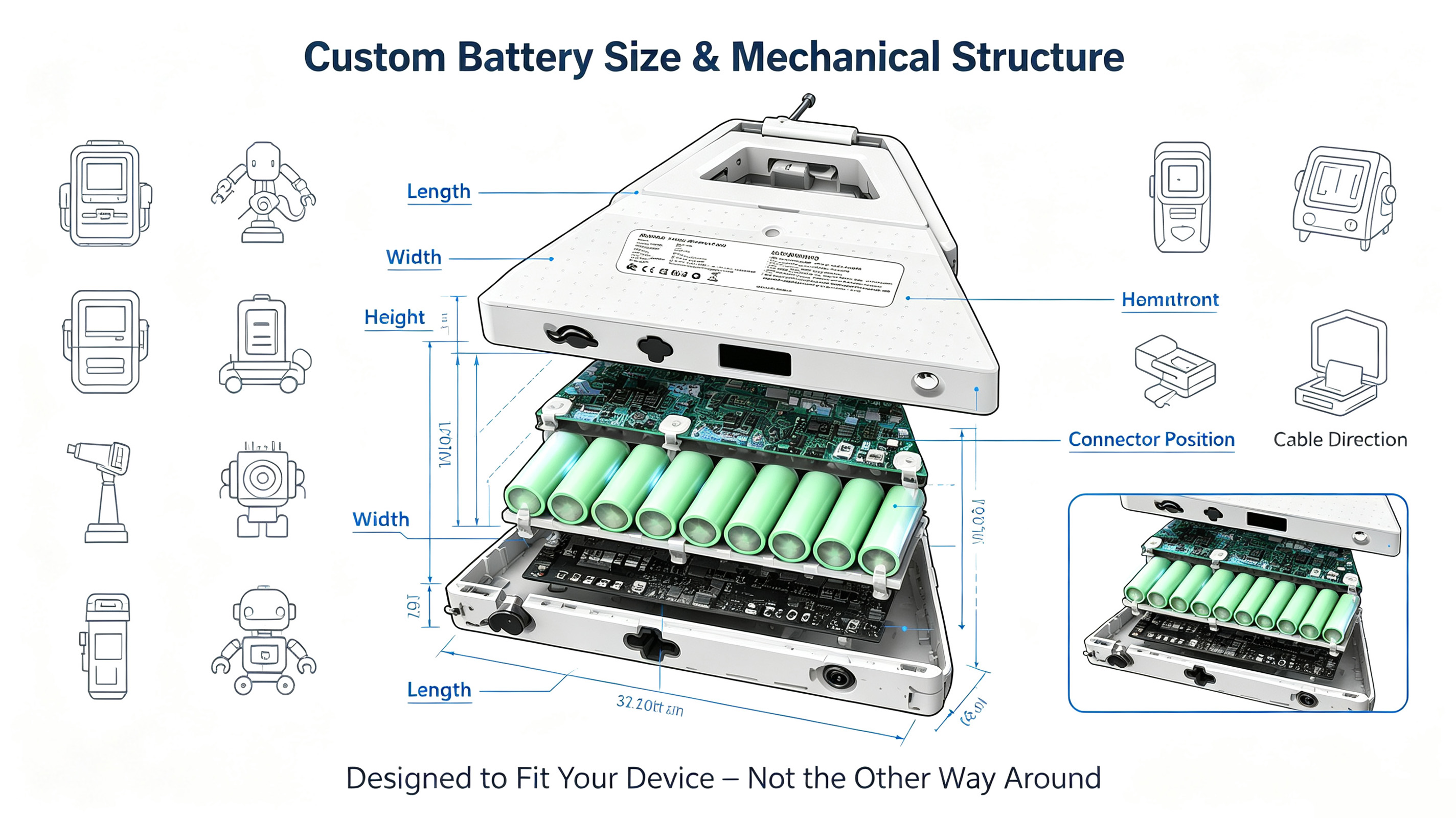
4. Consider Battery Size and Mechanical Structure
Battery space is often limited inside the device.
A custom battery pack may need to match:
For products with limited internal space, the battery may need to be designed around the device's existing structure.
This is especially important for medical devices, handheld instruments, robots, surveying equipment, portable electronics, and professional equipment.
A custom battery pack allows the battery dimensions and structure to be optimized according to the available installation space.
5. Select the Appropriate BMS
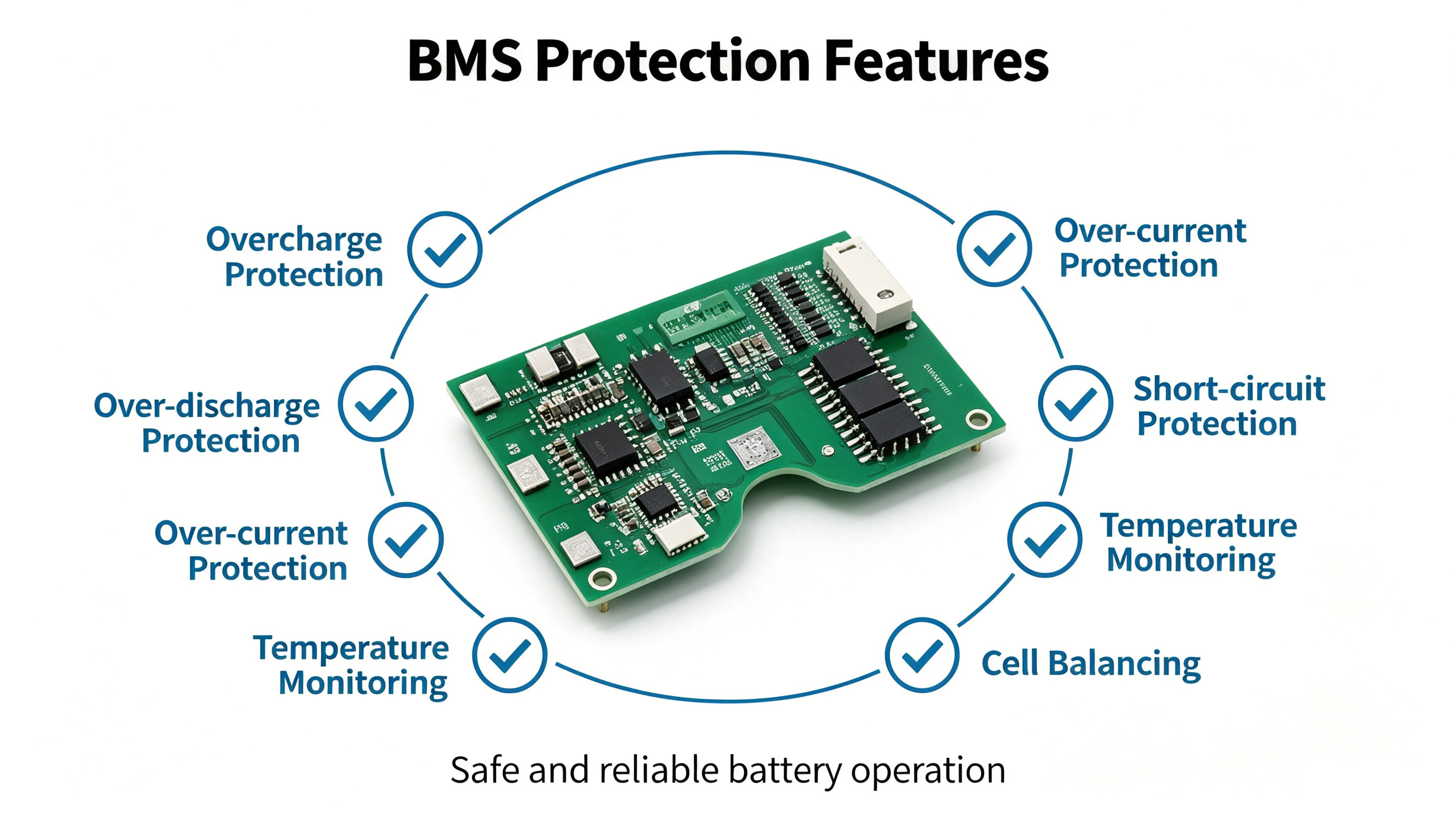
The Battery Management System (BMS) is an important part of many lithium battery packs.
Depending on the application, a BMS can provide protection and monitoring functions such as:
For intelligent equipment, the battery may also need to communicate with the device.
Common communication options include:
CANBUS, RS485 and other communication protocols.
The BMS should therefore be selected according to both the battery chemistry and the requirements of the host device.
6. Choose the Correct Connector and Interface
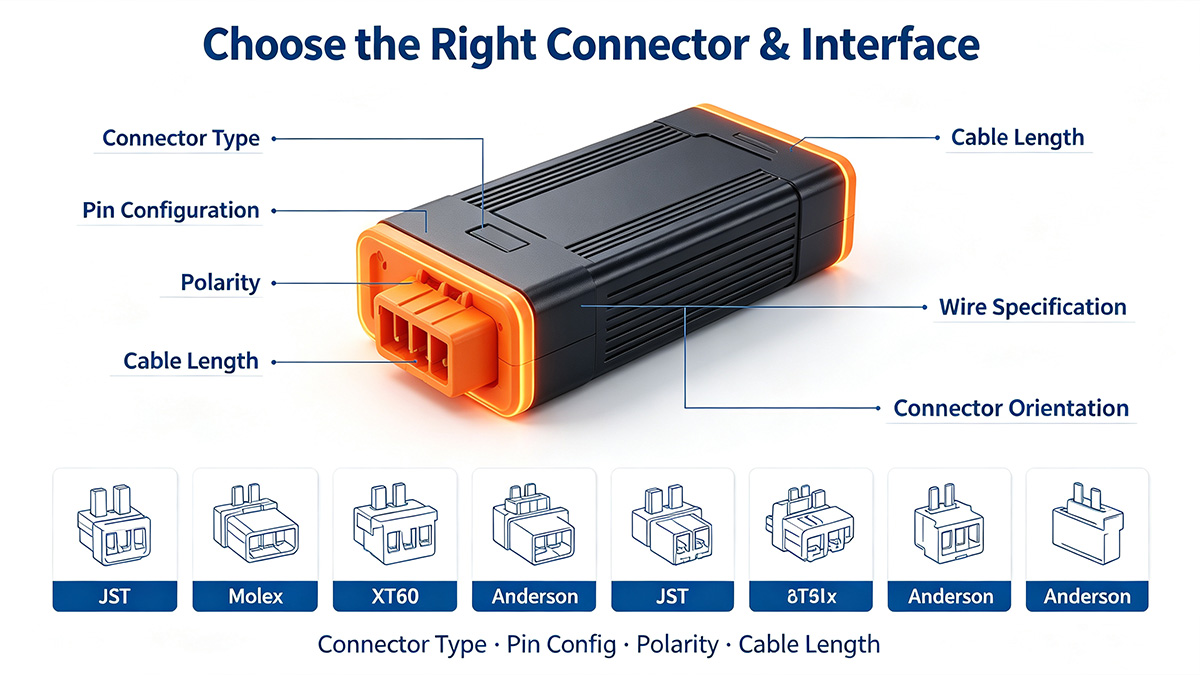
The connector is another important part of a custom battery pack.
The battery may need to match the device in terms of:
Even when the voltage and capacity are correct, an incompatible connector or pin configuration can prevent the battery from working properly.
For OEM battery projects, the connector and wiring can be customized according to the device requirements.
7. Consider the Operating Environment
The battery's working environment can have a significant impact on its performance.
Consider factors such as:
For example, a battery used in a GNSS receiver or surveying instrument may need to withstand outdoor field conditions, while a battery for a medical device may place greater emphasis on reliability and safety.
For industrial and outdoor applications, battery design should take the actual working environment into consideration from the beginning.
8. Think About Safety and Certification
Battery safety should be considered throughout the design and manufacturing process.
Depending on the battery type and target market, projects may require documentation or testing such as:
The exact requirements depend on the battery chemistry, product type, transportation method, and destination market.
For international OEM projects, certification and transportation requirements should be considered before mass production.
9. Work With a Custom Battery Manufacturer
When standard batteries cannot meet your device requirements, a custom battery pack can provide a more suitable solution.
A professional battery manufacturer can help with:
Battery Chemistry → Voltage & Capacity → Cell Selection → BMS → Connector → Mechanical Design → Testing → Certification → Mass Production
This approach helps ensure that the battery is designed as part of the complete device rather than treated as an independent component.
Scan to Wechat :

Scan to Whatsapp :

Home
Products
contact